
⚔️ Google Ads vs. Meta Ads: Which Platform Is Best for Your Business?
When a business decides to invest in paid advertising, they almost immediately face the fundamental choice: Google Ads or Meta Ads (Facebook and Instagram).
The truth is, both platforms are incredibly powerful, but they operate using entirely different principles and target users at opposing points in the buyer's journey. Using the wrong one for your objective is one of the most common and costly mistakes a business can make.
Understanding the core difference between Intent and Discovery is the key to mastering your digital advertising budget.
The Core Difference: Intent vs. Discovery
The most critical distinction lies in where the user is mentally when they see your ad:
1. Google Ads: The Intent Platform
Google Ads (Search, Shopping, Display) is an Intent-Based Platform.
How it works: Users are actively searching for a solution. They type "web development agency Manchester" or "best CRM software" into Google.
The Advantage: Your ad appears at the precise moment they have high intent to purchase. The goal is to capture existing demand.
Best for: Driving direct sales, securing immediate leads, and targeting users who are already aware of their need (e.g., locksmiths, e-commerce products, B2B services).
2. Meta Ads (Facebook/Instagram): The Discovery Platform
Meta Ads is a Discovery-Based Platform.
How it works: Users are scrolling their social feed, looking at pictures of their friends, or watching Reels. They are not actively looking for your product.
The Advantage: You target users based on granular demographic data (age, job title, interests, life events). The goal is to generate new demand and improve brand awareness.
Best for: Visual products, targeting niche B2B roles, telling brand stories, and nurturing leads over time (e.g., fashion, fitness, consumer services).
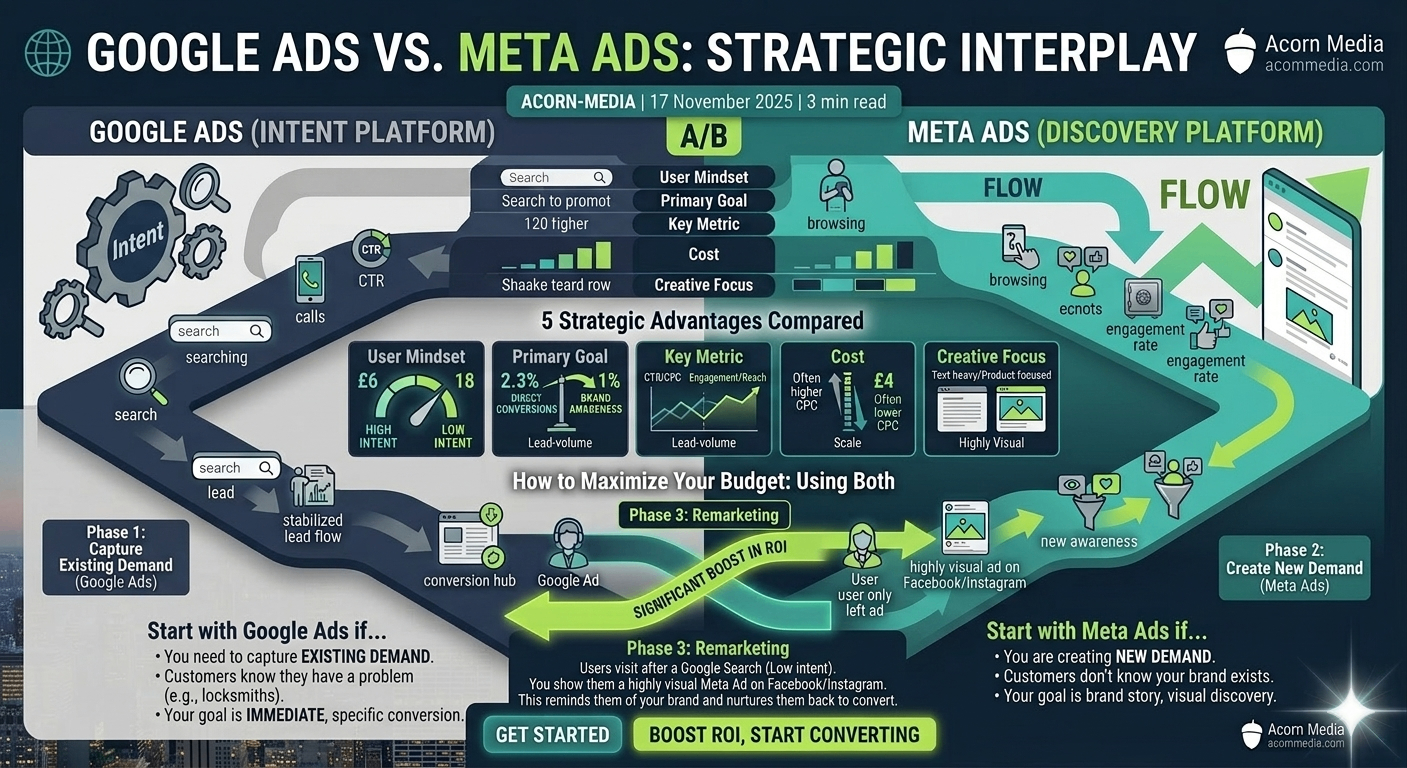
5 Strategic Advantages Compared
| Feature | Google Ads (Intent) | Meta Ads (Discovery) |
|---|---|---|
| User Mindset | Actively searching for a solution (High Intent). | Passive browsing/socialising (Low Intent). |
| Primary Goal | Direct Conversions (Clicks, Purchases, Calls). | Brand Awareness and lead volume. |
| Key Metric | Click-Through Rate (CTR) and Cost Per Conversion (CPC). | Engagement Rate, Reach, and Lead Quality. |
| Cost | Often higher Cost Per Click (CPC) due to high competition for keywords. | Often lower CPC, but a higher cost to acquire a qualified lead. |
| Creative Focus | Text-heavy (Search Ads) or product-focused (Shopping Ads). | Highly Visual (Image and Video) to stop the scroll. |
How to Maximize Your Budget: Using Both
For most businesses, the optimal digital marketing strategy involves using both platforms in a coordinated way:
Phase 1: Capture Existing Demand (Google Ads)
Use Google Search Ads to capture users who are ready to buy right now. This stabilises your lead flow and provides immediate ROI.
Phase 2: Create New Demand (Meta Ads)
Use Meta Ads to target people who fit your perfect customer profile but don't yet know your brand. This feeds the top of your funnel, increasing awareness and preparing future customers.
Phase 3: Remarketing
This is where the platforms work together beautifully.
A user visits your website after clicking a Google Ad.
They leave without converting (low intent).
You use Meta Ads to show them highly visual, engaging ads on Facebook/Instagram, reminding them of your brand and nurturing them back to your site. This significantly boosts conversion rates.
Which Should You Start With?
The choice depends entirely on your product and budget:
Start with Google Ads if your product is a necessity (e.g., plumbing, legal services) or a commodity that people actively search for.
Start with Meta Ads if your product is highly visual, unique, or targets a very specific demographic or interest group.
Ultimately, mastering both requires specific expertise. Don't waste budget guessing which one to use. Partner with an agency that understands the strategic interplay between Google Ads and Meta Ads to build a predictable, profitable growth machine.
Stop Guessing Your Budget. Request a Paid Media Strategy Review to define your best path to ROI.