
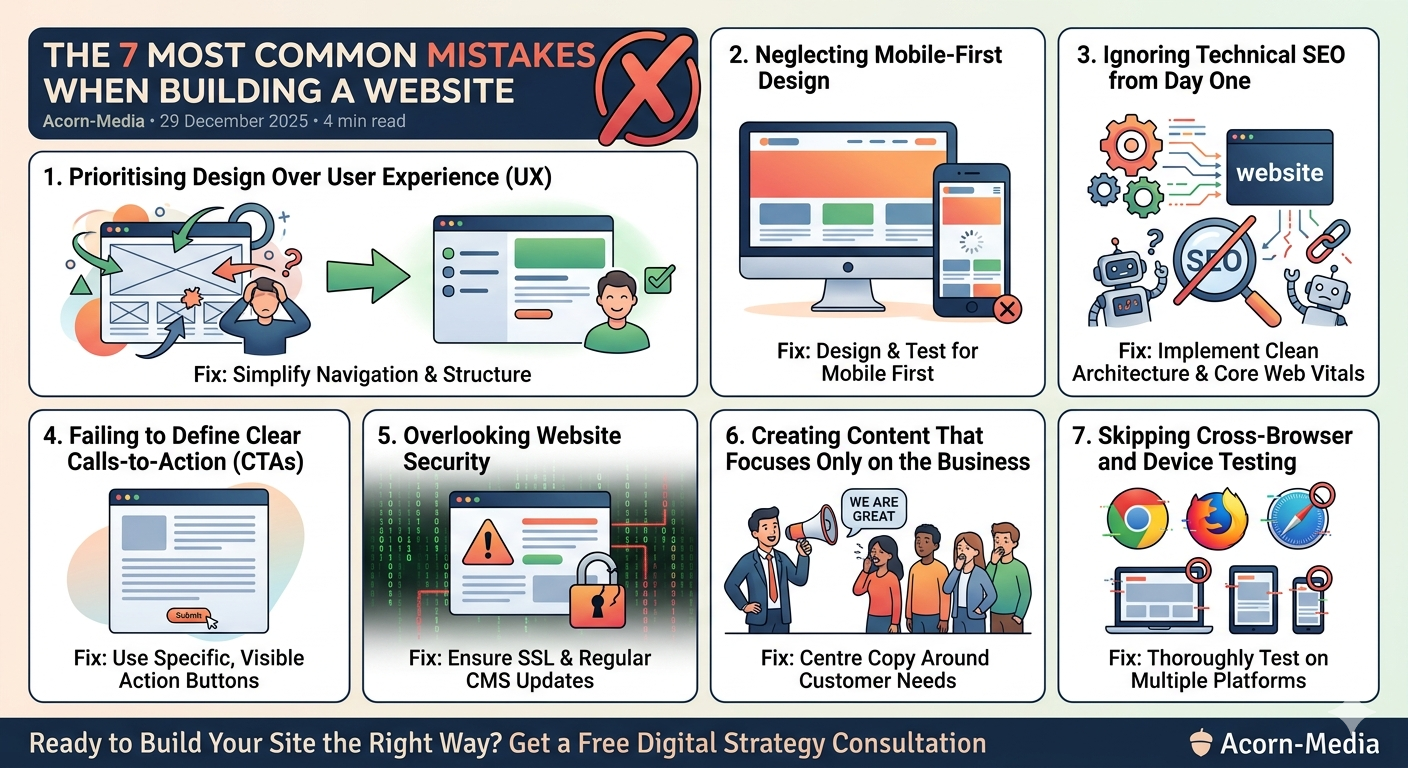
🚫 Stop Sabotaging Your Site: The 7 Most Common Mistakes When Building a Website
Getting a new website off the ground is exciting, but it's a complex process rife with potential errors. For many businesses, the temptation is to focus purely on the visual design, neglecting the critical technical and strategic groundwork.
Ignoring these fundamental elements can turn a significant investment into a costly, underperforming liability.
Whether you're planning a website build or reviewing your existing site, here are seven of the most common website mistakes that can sabotage your business's success and how to avoid them.
1. Prioritising Design Over User Experience (UX)
A beautiful website is useless if users can't find what they need. One of the most common mistakes when building a website is focusing on 'wow factor' instead of clear, intuitive navigation.
The Problem: Overly creative menus, non-standard icons, or distracting animations confuse visitors.
The Fix: UX should come first. Base your structure on user needs: make your contact details visible, keep navigation simple, and ensure the journey from homepage to contact form is crystal clear.
2. Neglecting Mobile-First Design
In 2025, a mobile-responsive site isn't optional; it's mandatory. Many developers still build for desktop first, then adapt the layout for mobile. This leads to slow, clunky experiences on smartphones.
The Problem: Slow load times and clumsy layouts on mobile devices immediately drive away over half of your potential audience.
The Fix: Adopt a mobile-first approach. Design, structure, and speed should all be tested and optimised for the smallest screen before scaling up to the desktop view.
3. Ignoring Technical SEO from Day One
SEO is not something you "bolt on" later; it must be baked into the website build from the foundation. Skipping technical checks is one of the most detrimental website building mistakes.
The Problem: Poor site architecture, unoptimised image file sizes, and missing header tags prevent search engines from correctly crawling and understanding your site.
The Fix: Ensure your developer correctly implements a clean URL structure, fast loading speeds (Core Web Vitals), and proper use of headings (
H1,H2, etc.) to guide both users and Google.
4. Failing to Define Clear Calls-to-Action (CTAs)
Every single page on your website needs a purpose. If a page doesn't tell the visitor what to do next, the page is failing its job.
The Problem: Generic 'Contact Us' buttons or long pages with no clear next step leave the conversion entirely up to the user.
The Fix: Define the primary CTA for every page. Use benefit-driven language (e.g., "Book Your Free Audit") and make conversion buttons visually distinct and strategically placed (e.g., above the fold).
5. Overlooking Website Security (SSL and CMS Updates)
Security should never be an afterthought. Businesses often forget to maintain their platform, leading to severe vulnerabilities.
The Problem: Not installing or renewing a Secure Sockets Layer (SSL) certificate, or failing to keep your CMS (Content Management System) and plugins updated, invites hackers and destroys customer trust.
The Fix: Ensure your hosting includes an active SSL certificate (for the crucial padlock icon) and implement a robust plan for ongoing platform maintenance and security patching from day one.
6. Creating Content That Focuses Only on the Business
A common mistake is treating the website as a digital brochure focused entirely on "we are great," rather than addressing the customer's needs.
The Problem: Vague mission statements and jargon-heavy descriptions bore the user. Users care about one thing: "How will this help me?"
The Fix: Centre your copy around the customer. Lead with their pain points and clearly articulate the benefits you provide, not just the features of your service.
7. Skipping Cross-Browser and Device Testing
Just because your new site looks perfect on your office monitor using Google Chrome doesn't mean it works everywhere.
The Problem: Visual elements breaking, forms failing, or interactive features glitching on different browsers (Firefox, Safari, Edge) or operating systems (iOS, Android).
The Fix: Thoroughly test your website on various devices and major browsers before launch. A professional developer will incorporate rigorous testing into the quality assurance phase.
Ready to Build Your Site the Right Way?
Avoiding these common website mistakes requires strategic planning and technical expertise. A successful website isn't built on aesthetics alone; it's built on a foundation of user experience, technical SEO, and clear conversion goals.
If you’re planning a website build and want a partner who prioritises performance and growth over quick fixes, our team can help.
Get Your Project Started: Request a Free Digital Strategy Consultation.